What is the Difference Between All-in-One and Split Solar Lights

Time:2026-06-01 Author:Sienna
0%

When considering solar lighting solutions, many users wonder, "What is the difference between All-in-One and Split solar lights?" These two types of solar lights have distinct features and advantages. All-in-One solar lights integrate the solar panel, battery, and light fixtures into a single unit. This design simplifies installation. However, it often limits flexibility in terms of placement and maintenance.

On the other hand, Split solar lights separate these components. The solar panel can be mounted in an optimal location to capture sunlight, while the light fixture can be positioned independently. This versatility offers enhanced efficiency, but it may require more installation effort. Understanding these differences is crucial for making an informed decision.

Both types have their applications. All-in-One lights are often chosen for ease of use in residential areas. Split solar lights are favored for larger projects needing specific placement. By exploring each option, users can determine which suits their needs best.
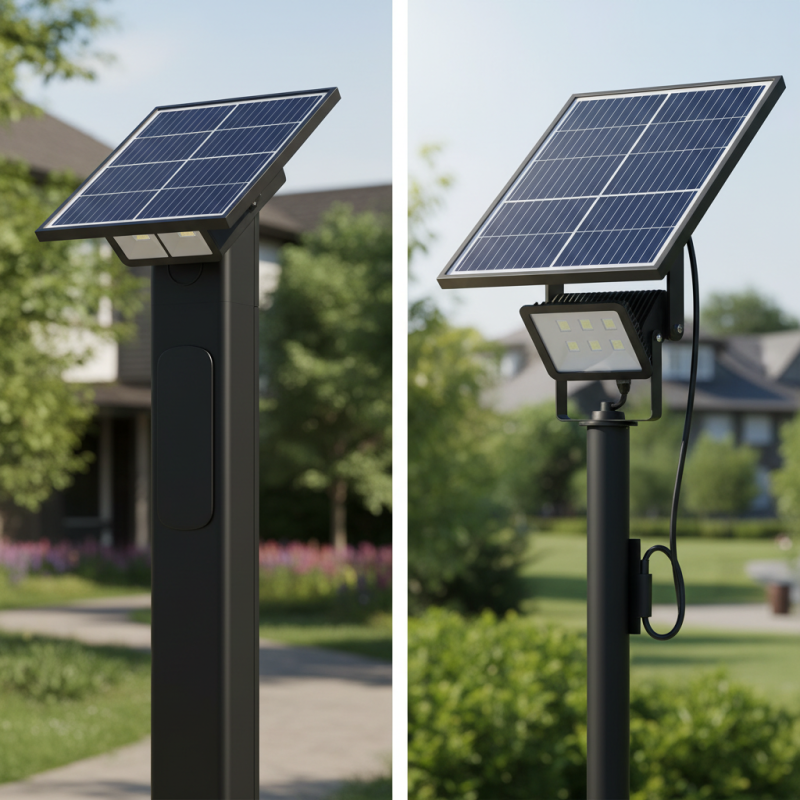
What is the Difference Between All-in-One and Split Solar Lights

Definition of All-in-One Solar Lights

All-in-one solar lights are compact systems that integrate all components into a single unit. They typically include a solar panel, battery, LED lights, and a motion sensor all in one design. This compact nature simplifies installation and maintenance, making them ideal for residential use. A 2023 industry report from Solar Energy International highlighted that these units can significantly reduce energy costs, providing near-zero operational expenses due to their reliance on solar energy.

All-in-one solar lights shine in their efficiency and ease of use. They often come with built-in sensors that optimize power consumption based on environmental conditions. Reports estimate that the efficiency of energy conversion in these units can reach 21%, thanks to advancements in solar technology. However, their dependency on sunlight for performance can be a limitation. In areas with frequent overcast weather, energy storage may be inadequate, affecting their brightness during critical times.

Understanding the functionality of all-in-one solar lights is essential for consumers. While these units offer various benefits, they may not suit every situation. For instance, installation on rooftops or areas with limited sunlight can lead to underperformance. Regularly assessing the location and environmental factors is crucial before purchasing. Balancing efficiency and reliability requires careful consideration and a clear understanding of one’s specific needs.

Definition of Split Solar Lights

Split solar lights represent a distinct technology in the solar lighting market. Unlike traditional all-in-one models, split solar lights separate the solar panel from the light fixture. This design allows for greater versatility in placement. For instance, the solar panel can be installed in a location with optimal sunlight, while the light can be positioned in areas that require illumination.

According to industry reports, split solar lights can foster enhanced energy efficiency. When positioned correctly, they capture sunlight more effectively, resulting in improved battery charging. A study indicated that split solar lights can boost overall brightness by up to 30% compared to all-in-one systems. Yet, users must consider potential drawbacks. Installation can be more complex, and the connectors may wear over time, leading to potential issues.

In addition, split solar lights often provide better customization options. Many models allow users to adjust the angle of the solar panel for optimal sunlight exposure. However, this flexibility can lead to inconsistent setups if not installed properly. Ensuring a secure fit is crucial, yet many overlook this during installation. Addressing installation challenges can lead to improved performance and reliability in solar lighting solutions.

Key Features of All-in-One Solar Lights

All-in-One solar lights have gained popularity for their compact design and integrated features. They combine a solar panel, battery, and LED in a single unit. This design simplifies installation. You can easily mount them on walls or posts. Such ease is appealing for homeowners. No wiring is needed, making them a stellar choice for outdoor lighting.

The key features of All-in-One solar lights include built-in motion sensors and adjustable brightness settings. Motion sensors enhance security by turning on the light when movement is detected. Adjustable brightness allows customization based on personal preference. This feature helps save energy, prolonging battery life. Solar lights can be affected by weather conditions. Some users find that cloudy days may reduce efficiency.

While All-in-One solar lights offer many benefits, challenges exist. For example, their runtime can vary significantly. This inconsistency can be frustrating. Additionally, while they are easy to install, placement is crucial for optimal sunlight exposure. Users must ensure they are positioned correctly, which is not always straightforward. These factors can impact the overall effectiveness of outdoor lighting solutions.

What is the Difference Between All-in-One and Split Solar Lights - Key Features of All-in-One Solar Lights

Feature All-in-One Solar Lights Split Solar Lights
Design Compact and integrated Separate components for solar panel and light
Installation Easy and quick installation, typically wall-mounted More complex, requires placement of multiple components
Brightness Generally lower brightness due to size constraints Higher brightness options available with larger panels
Flexibility Limited flexibility in placement More flexibility, can optimize panel and light position
Cost Usually more affordable as a complete unit Potentially higher upfront cost due to separate components
Maintenance Lower maintenance; easy to replace Maintenance can be more complicated with multiple parts

Key Features of Split Solar Lights

Split solar lights are an innovative lighting solution that separates the solar panel from the light fixture. This design allows for greater flexibility in placement. You can position the solar panel where it gets optimal sunlight while placing the light fixture in shaded areas. This can improve overall efficiency.

One key feature of split solar lights is their battery capacity. These lights often have larger batteries than all-in-one models, allowing for longer illumination times. This means they can store more energy for nighttime use. Additionally, many split systems have adjustable brightness settings. This feature can help conserve energy when full brightness isn't needed.

Tips: Consider installing the solar panel in a sunny area, away from obstructions like trees or buildings. Regularly clean the solar panel to maintain efficiency. Finding the right balance between light intensity and battery life can lead to better performance.

Comparison of Installation and Maintenance Requirements

When comparing all-in-one and split solar lights, installation and maintenance requirements vary significantly. All-in-one solar lights typically offer an easier setup. These units combine the solar panel, battery, and light fixture in one compact design. Usually, they just need to be mounted onto a pole or wall. However, this simplicity comes with limitations. For example, the positioning of the light and solar panel is fixed, which might not be ideal for every location.

In contrast, split solar lights involve two separate components: the solar panel and light fixture. This design allows for greater flexibility during installation. One can place the solar panel in direct sunlight while mounting the light in a shaded area. However, this setup may require more effort and time as you deal with wiring and positioning. Maintenance also differs; while all-in-one models are simpler to maintain, issues can arise if one component fails. The split systems, although requiring more upkeep, usually allow for component replacements. Each system offers distinct advantages and drawbacks, making it essential to weigh these factors for your specific needs.

Comparison of Installation and Maintenance Requirements of All-in-One vs. Split Solar Lights

FAQS

: What are all-in-one solar lights?

: They are compact units combining solar panel, battery, LED lights, and sensor in one design.

What are the benefits of all-in-one solar lights?

They reduce energy costs and require little maintenance. They are ideal for residential use.

How do all-in-one solar lights perform in cloudy weather?

Their efficiency depends on sunlight. Cloudy weather can limit energy storage, affecting brightness.

Is installation easy for all-in-one solar lights?

Yes, they are simple to install. Just mount them on a pole or wall.

What are the limitations of all-in-one solar lights?

Fixed positioning can lead to underperformance. They may not suit all locations.

How do they compare to split solar lights?

Split solar lights offer flexibility in placement but require more wiring and maintenance.

Can all-in-one solar lights handle shade?

Not effectively. They perform best in direct sunlight.

What considerations should consumers make before buying?

Assess environmental factors and specific needs. It's crucial for effective performance.

What happens if a component fails in all-in-one lights?

Maintenance may be challenging because all parts are integrated.

Are all-in-one solar lights suitable for rooftops?

Not always. Limited sunlight can hinder their performance on rooftops.

Conclusion

What is the difference between All-in-One and Split solar lights? All-in-One solar lights integrate the solar panel, battery, and light fixture into a single unit, making installation straightforward and reducing space requirements. They are typically easier to set up and are suitable for areas where space is limited. In contrast, Split solar lights feature separate components, which can allow for better optimization of solar exposure and a potentially more powerful lighting capability, as the solar panel can be positioned in an ideal location away from the light.

When it comes to installation and maintenance, All-in-One systems are often simpler as they require minimal assembly and fewer connections, making them low-maintenance. On the other hand, Split solar lights may require more effort for installation since they involve multiple parts but can offer flexibility in positioning. Understanding these differences helps consumers choose the right type of solar lighting based on their specific needs and environmental conditions.

Sienna

Sienna

Sienna is a skilled marketing professional with a deep expertise in our company’s core products and services. With a passion for innovation and detail, she plays a pivotal role in crafting insightful blog posts that not only highlight the unique features of our offerings but also provide valuable......