In the evolving landscape of lighting technology, energy efficiency remains a crucial focus. Many businesses face the decision of choosing between LED and HID lighting. Understanding the best choice involves an essential question: "How to calculate the energy savings of LED vs HID?"
Lighting expert Jane Smith emphasizes, “Effective energy savings can be a game-changer for sustainability.” Her insights guide us toward analyzing the distinct energy consumption levels of both technologies. LED lights are known for their longevity and reduced power usage. In contrast, HID lights, while brighter, can consume significantly more energy over their lifespan.
Quantifying energy savings requires careful evaluation. Factors like initial costs, maintenance, and longevity play a role. Each installation has unique variables, which can make the comparison challenging. Real-life case studies show varying results, highlighting the need for tailored calculations. By examining historical data and usage patterns, businesses can make informed decisions. Ultimately, understanding the energy landscape empowers smarter choices in lighting solutions.
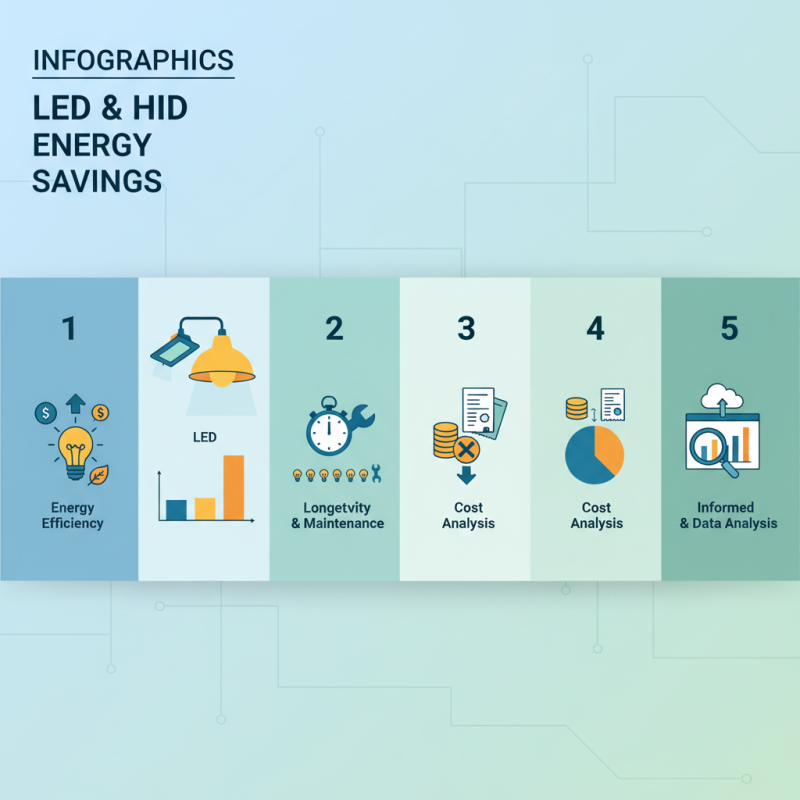
Understanding LED and HID Lighting Technologies
LED and HID lighting technologies represent two dominant options for commercial and industrial use.
LED, or Light Emitting Diode, lights are known for their energy efficiency.
Reports indicate that LEDs consume up to 75% less energy than traditional HID (High-Intensity Discharge) lights.
This means significant cost savings over time. Facilities that switch to LED often see a return on investment within a few years due to reduced electricity bills.
HID lights, while often less expensive upfront, have disadvantages. They require more energy to operate and have shorter lifespans.
On average, an HID bulb may last around 15,000 hours, compared to the impressive 50,000 hours of a typical LED bulb.
That longevity translates into less frequent replacements, reducing labor and material costs.
However, a transition to LED can initially seem daunting. Some facilities may struggle with the higher initial investment.
When comparing these technologies, it’s clear that LED lights often lead the way in efficiency and sustainability.
Industry studies highlight that organizations shifting to LEDs can see up to a 50% reduction in greenhouse gas emissions.
Yet, some users remain hesitant, unclear on the long-term benefits versus short-term gains.
With ongoing advancements in LED technology, the choice appears to be increasingly favoring energy-efficient solutions.
Key Factors Influencing Energy Consumption in Lighting
When assessing energy consumption in lighting, key factors play a significant role. Two primary technologies are LED and HID. LEDs are known for lower energy usage. They convert most electricity into light rather than heat. Conversely, HID fixtures often waste energy on heat production, making them less efficient.
The environment also influences energy consumption. Room size, ceiling height, and color can affect how light interacts. A larger space may require more lights, increasing overall energy usage. Meanwhile, using lighter colors on walls can reflect light better and reduce the number of fixtures needed. It’s important to evaluate each area individually.
Another aspect is maintenance. LEDs generally have a longer lifespan than HID lights. This longevity translates into fewer replacements and labor costs. However, initial costs for LED setups can be higher. Striking a balance between energy savings and upfront investment is crucial. Regular maintenance, such as cleaning fixtures, also impacts energy efficiency. Understanding these factors can lead towards more informed decisions in lighting energy savings.
Step-by-Step Guide to Calculating Energy Savings
Calculating energy savings between LED and HID lighting can feel overwhelming. However, breaking it down into simple steps can help. Start by assessing the wattage of your current HID lights. This gives you a baseline for your calculations. Next, determine the wattage of the LED lights you plan to install.
Next, multiply the wattage difference by the number of hours your lights operate each month. This will yield your monthly energy savings. Remember, don’t forget to include the number of fixtures in your calculation.
Tips for accuracy: Double-check your wattage figures. Use a professional energy calculator for more precise estimates. If unsure, consult with a lighting expert. Their insights can refine your calculations and offer alternative solutions. Taking time to validate each step will enhance your understanding of potential savings.
When evaluating your options, consider the upfront costs versus long-term savings. It may feel daunting initially, but calculating energy savings accurately can lead to substantial financial benefits. Stay attentive to your specific lighting needs as each space is different.
LED vs HID Energy Savings Calculation 5 Simple Steps
| Lighting Type |
Wattage |
Annual Usage (Hours) |
Annual Energy Consumption (kWh) |
Energy Cost per kWh |
Annual Cost |
Savings with LED |
| HID |
400 W |
2000 |
800 |
$0.12 |
$96.00 |
- |
| LED |
150 W |
2000 |
300 |
$0.12 |
$36.00 |
$60.00 |
Comparative Analysis of LED and HID Lifespan and Efficiency
The debate between LED and HID lighting often centers on lifespan and efficiency. According to the U.S. Department of Energy, LEDs can last up to 25,000 hours, while HID lamps typically last around 15,000 hours. This significant difference affects overall maintenance costs and operational downtime. For instance, switching to LED can reduce replacement frequency, thereby lowering labor costs and waste associated with discarded bulbs.
In terms of efficiency, LEDs consume 75% less energy compared to traditional HID lights. The Lighting Research Center found that the average energy usage of LED fixtures is about 50 watts, whereas equivalent HID fixtures can use over 150 watts. This reduction translates into substantial cost savings on electric bills. However, even with these benefits, some users express concerns about the initial investment in LED technology, which may seem higher than HID systems. Yet, the long-term savings often justify this transition.
Ultimately, organizations must weigh the initial costs against lifetime savings. While LEDs offer better longevity and efficiency, the switch may require upfront capital. Balancing immediate budgets with long-term benefits is crucial for an informed decision. Exploring these factors will allow facilities to navigate toward a more sustainable lighting future effectively.
LED vs HID Energy Savings Calculation
Real-world Applications and Case Studies of Energy Savings
In the pursuit of energy savings, real-world applications often highlight the differences between LED and HID lighting. Research from the U.S. Department of Energy shows that LED lights use up to 75% less energy than traditional HID systems. This significant reduction is evident in various sectors, including commercial buildings, street lighting, and industrial facilities.
A case study involving a large manufacturing plant revealed that switching from HID to LED resulted in an annual energy cost saving of over $30,000. This facility also experienced a substantial decrease in maintenance costs due to LED's longer lifespan. The reduction in energy consumption translates not just to financial savings but also a lower carbon footprint. Studies indicate that LEDs can provide up to 25,000 hours of service compared to 10,000 hours for HID solutions.
Despite the many benefits, the shift is not universally adopted. Some facilities hesitate due to the upfront costs or lack of information on long-term savings. However, the data clearly supports the transition to LEDs as a wise investment. As energy prices rise, the need for effective lighting solutions becomes increasingly urgent, making case studies essential in illustrating potential benefits. The path forward is paved with careful consideration of both immediate costs and long-term savings.
FAQS
: The two main technologies are LED and HID.
LEDs convert most electricity into light, wasting less energy on heat.
Room size, ceiling height, and wall color influence how light spreads and reflects.
LEDs last up to 25,000 hours; HID lamps last about 15,000 hours.
Initial costs for LED setups can be higher than those for HID systems.
Regular maintenance, like cleaning fixtures, significantly affects energy savings.
LEDs use 75% less energy compared to traditional HID lights, leading to lower costs.
Concerns often arise about the higher initial investment required for LED technology.
They should balance immediate costs with long-term savings for a wise choice.
Analyzing each space's needs can optimize energy efficiency and lighting needs.
Conclusion
In the comparison of LED and HID lighting technologies, understanding the fundamental differences can significantly impact energy savings. This article outlines key factors influencing energy consumption, such as wattage, efficiency, and lifespan, which are crucial for making informed lighting decisions.
To determine "how to calculate the energy savings of LED vs HID," a step-by-step guide is provided, allowing readers to assess their specific scenarios accurately. Additionally, a comparative analysis highlights the superior lifespan and efficiency of LEDs, further emphasizing their long-term benefits. Through real-world applications and case studies, the article illustrates the practical implications of making the switch, demonstrating how energy savings can lead to reduced operational costs and environmental benefits.

 Boray Light