LED street lights are often praised for long service life, but “long-lasting” does not mean permanently bright. After several years, a familiar road may look slightly darker. The change can be gradual, making it difficult to notice until nearby lamps show different brightness. What causes LED street lights to dim over time? The answer usually involves several connected factors, not one simple failure.
LED chips slowly lose light output through heat, electrical stress, and material aging. Poor heat dissipation is especially important. Dust, blocked vents, damaged fins, or a tightly sealed housing can trap heat around the LED module. On a hot summer evening, that accumulated heat may shorten component life. Drivers can also weaken, causing unstable current or reduced power. In coastal areas, moisture and salt may corrode connectors, while vibration can loosen internal parts. Lens yellowing and surface grime further reduce the light reaching the street.
Field inspections often reveal mixed causes. A technician may find a clean LED module beside a failing driver, or a bright lamp with a badly clouded lens. Manufacturer data, temperature records, operating hours, and photometric measurements provide stronger evidence than visual judgment alone. It is tempting to blame every dimming problem on the LED chip. That assumption can waste time. Maintenance teams should inspect the complete fixture, compare readings with original specifications, and record changes over time. Some explanations remain uncertain without testing. Careful diagnosis supports safer roads, better energy planning, and more reliable replacement decisions.
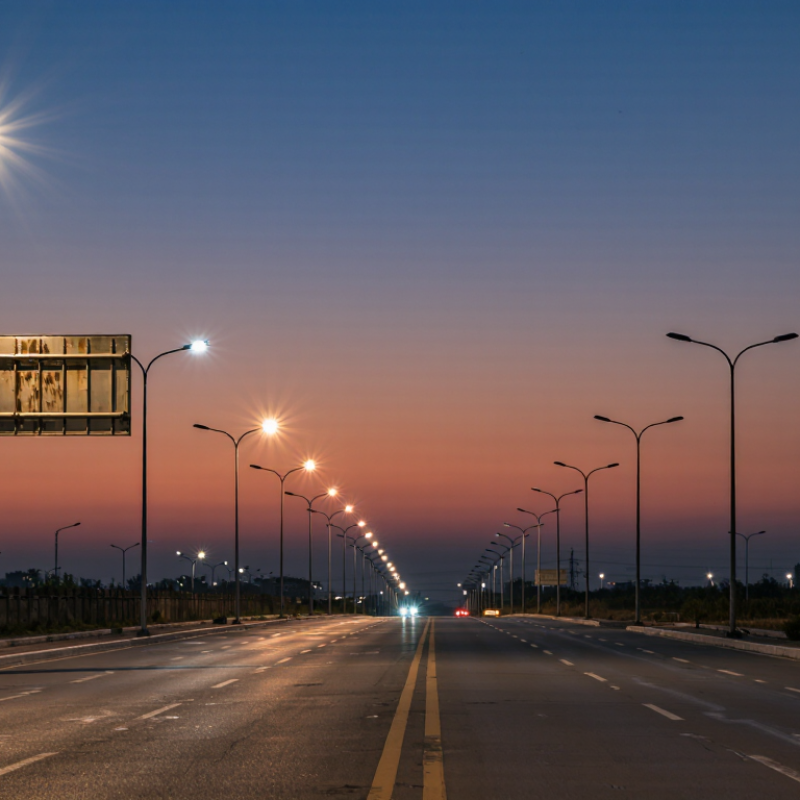
How LED Street Lights Produce and Maintain Brightness
Why Do LED Street Lights Dim Over Time?
How LED Street Lights Produce and Maintain Brightness
An LED street light creates brightness when electrical current passes through semiconductor chips. These chips release energy as visible light, not by heating a wire. A driver regulates the current, while lenses direct light across the road. The result is steady illumination with lower energy use than many older lamps. It is not perfectly steady, though.
Heat is the main long-term enemy. During operation, LED chips generate heat that travels into a metal heat sink and then into the surrounding air. If dust blocks the vents, or the fixture traps heat, the chips age faster. Their light output gradually declines. The driver may also weaken, causing flicker, delayed startup, or sudden darkness. Moisture inside the housing can damage electrical connections.
Good maintenance protects brightness. Technicians can measure light levels, inspect seals, clean lenses, and check driver performance during scheduled visits. A cloudy lens may reduce road illumination even when the LEDs remain healthy. Nearby trees can create unexpected shadows. In my view, replacing parts only after failure is a weak approach. A simple inspection record often reveals slow decline earlier. Still, measurements are not flawless; weather, traffic dust, and camera settings can distort results. Comparing readings from the same locations and conditions gives a more dependable picture of performance.
Why Do LED Street Lights Dim Over Time?
How LED street lights produce and maintain brightness
How LEDs Produce Light
Electrical current passes through a semiconductor junction, where electrons release energy as photons. The LED driver regulates this current to create stable light output.
Why Output Declines
Long-term heat exposure, phosphor aging, optical material degradation, and driver wear gradually reduce luminous flux. LEDs usually dim progressively rather than failing suddenly.
How Brightness Is Maintained
Efficient heat sinks, controlled operating current, sealed optics, regular lens cleaning, and timely driver maintenance help preserve light levels throughout the fixture’s service life.
The chart uses a normalized reference profile reaching L70 at 100,000 operating hours. L70 means that approximately 70% of the initial luminous output remains; actual performance varies with temperature, drive current, design, and maintenance.
The Main Causes of LED Street Light Dimming
Why Do LED Street Lights Dim Over Time?
The Main Causes of LED Street Light Dimming
LED street lights rarely become dim for one reason. Their output usually falls through several small changes. In field inspections, the first clue is often a darker road edge, not a failed lamp. LED chips naturally lose light after long operation. This process is called lumen depreciation. Heat accelerates it. A fixture mounted above hot asphalt may run much warmer than its test conditions. Poor airflow, blocked vents, and undersized heat sinks trap that heat. Small design errors matter.
The driver can age too. Its capacitors, control circuits, and surge protection components face thousands of operating hours. Voltage fluctuations and repeated switching add stress. A weak driver may reduce current before the LEDs stop working. The result is a quiet decline. No obvious flicker appears. Dirt is another practical cause. Dust, exhaust film, insects, and salt can cover the lens. Even a thin gray layer absorbs and scatters light. Moisture can cloud optical parts or corrode connections. In coastal areas, this happens faster.
Technicians should measure illuminance at road level, inspect driver output, and compare temperatures with maintenance records. They should also check photocells and dimming schedules. A control fault can make a healthy fixture appear weak. I have seen crews replace lamps when a loose connector caused the loss. That mistake wastes money. Still, temperature readings are not perfect, and one nighttime test can mislead. Seasonal traffic, wet pavement, and measurement position change the result. Good diagnosis needs repeated readings, clear records, and honest attention to installation conditions.
How Heat Accelerates LED Performance Loss
LED street lights rarely dim because the diode suddenly fails. Heat is the quieter culprit. Inside each luminaire, electrical current creates heat at the LED junction. If that heat cannot escape through the circuit board, housing, and fins, light output declines faster. Think of a sealed metal box above a hot road. Summer nights matter.
Industry testing shows why temperature deserves attention. IES LM-80-21 requires lumen-maintenance measurements for at least 6,000 hours. Testing commonly includes 55°C and 85°C case-temperature points. IES TM-21 then projects long-term maintenance from those measurements, rather than guessing from short demonstrations. The U.S. Department of Energy’s Solid-State Lighting Technology Fact Sheet describes useful life through lumen maintenance, not sudden failure. A common benchmark is L70, meaning 70% of initial light output remains. Those ratings are controlled-condition estimates. Real streets are less polite.
Poor ventilation, clogged fins, high drive current, and repeated thermal cycling can raise junction temperatures beyond design assumptions. Field audits should inspect light output, housing temperature, driver condition, and installation clearance—not only energy use. A thermal camera can reveal overheating indirectly through unusually warm housing surfaces. Still, this is not a perfect diagnosis. Airflow, optics, and sensor accuracy complicate the picture. Engineers sometimes blame aging when dirt or control settings cause the visible loss. Heat management deserves earlier attention, before dim fixtures become a night-time safety concern.
The Effects of Aging Components and Power Supply Problems
Why Do LED Street Lights Dim Over Time?
The Effects of Aging Components and Power Supply Problems
LED street lights rarely lose brightness because of the diodes alone. Heat, aging drivers, and unstable power supplies often work together. The U.S. Department of Energy reports that LED life ratings commonly use the L70 standard, meaning light output has fallen to 70 percent of its initial level. A 50,000-hour rating does not mean full brightness for 50,000 hours.
The driver is often the weak link. Its capacitors dry out, solder joints weaken, and surge protection slowly loses capacity. Repeated voltage spikes can damage internal circuits, while low voltage may create visible flicker or reduced output. The DOE’s LED Luminaire Lifetime report explains that driver reliability and thermal conditions strongly influence real service life. Field checks should measure input voltage, driver temperature, and output current. Looking only at the lamp can miss the actual fault.
A hot housing matters.
Poor heat transfer accelerates lumen depreciation. Dust, blocked vents, and sealed electrical compartments can raise internal temperatures during summer nights. IES TM-21 guidance also warns that lumen-maintenance projections depend on testing conditions and should not be treated as guaranteed field results. That limitation is easy to overlook. In practice, maintenance records are often incomplete, so diagnosing gradual dimming becomes partly an educated judgment. Replacing a driver may restore light, but damaged LED boards can remain permanently weaker.
Methods for Diagnosing and Preventing LED Light Degradation
Why Do LED Street Lights Dim Over Time?
Methods for Diagnosing and Preventing LED Light Degradation
LED street lights usually dim through gradual lumen depreciation. Heat, electrical stress, moisture, and aging optical materials can reduce output. In field inspections, I begin with the maintenance history. A light that looked normal last winter may now show a darker road surface. That change matters.
A visual check is useful, but it can mislead me. I compare the fixture with nearby units and measure illuminance at fixed points using a calibrated lux meter. I record readings at the same time of night. I also inspect the lens for yellowing, dust, cracks, or trapped water. Thermal imaging can reveal hot spots around the LED board or power supply. Driver output, wiring connections, and surge protection deserve testing too. Small voltage problems can create large lighting differences.
Keep it cooler.
Prevention depends on heat control and disciplined maintenance. Clean lenses carefully, especially near dusty roads or industrial areas. Confirm that heat sinks are not blocked by dirt, paint, or nesting materials. Use surge protection suited to local conditions, and tighten connections during scheduled inspections. Maintain a simple log with dates, lux readings, ambient temperature, and repair actions. Replace a fixture when measured performance falls below the project’s lighting requirement, not merely when it appears dim. I once trusted appearance alone and delayed a repair. That was a poor assumption. Periodic measurements provide stronger evidence and support safer decisions.
Conclusion
LED street lights produce brightness when electrical current passes through semiconductor materials, creating light with far greater efficiency than traditional lamps. Their performance depends on stable power, effective heat dissipation, and well-designed optical and control components. What causes LED street lights to dim over time? The main reasons include gradual LED aging, repeated thermal stress, dust or moisture entering the fixture, optical lens discoloration, and unstable power supplies or weakened drivers.
Heat is one of the most important factors because excessive temperature can accelerate the deterioration of LED chips, solder joints, capacitors, and other internal parts. As these components age, the light may become weaker, flicker, or operate less consistently. Diagnosing degradation typically involves checking brightness levels, operating temperature, wiring, voltage stability, driver condition, and signs of environmental damage. Regular cleaning, proper ventilation, surge protection, scheduled inspections, and timely replacement of worn components can help maintain illumination and extend the useful life of LED street lights.

 Boray Light