Explore our premium smart-controlled hardware designed for heavy-duty applications, safety signage, and extreme weather resilience.
Understanding how IoT-enabled lighting systems act as the data nervous system for modern smart factories, reducing operations cost and supporting net-zero goals.
Modern industrial facilities operate under strict regulations regarding energy utilization, operational safety, and system downtime. The classic wired lighting grid is no longer capable of meeting the demands of dynamic, automated manufacturing plants. To address these demands, wireless controlled industrial lighting has emerged as the logical step forward in industrial automation. By combining high-performance LED luminaires with wireless control protocols, companies can easily optimize energy schedules, integrate occupancy-based dimming, and perform remote diagnostic checks on demand.
For global procurement managers, identifying a reliable OEM/ODM partner in China is critical to scaling this transition. The combination of high-precision optics, robust structural integrity, and advanced IoT system integration forms the core offering of China's top industrial lighting suppliers. In this whitepaper, we dissect the technical requirements, supply chain strategies, and macro-industrial solutions shaping the future of industrial lighting.
Decentralized networks, robust mesh topologies, and the future integration of 5G, LoRaWAN, and edge-computed automation.
Our smart luminaires feature industrial-grade Bluetooth Mesh and Zigbee chips, enabling self-healing networks of over 10,000 nodes without localized congestion. Ideal for dense warehouse racking environments.
For heavy outdoor applications, port terminals, and smart cities, we implement LoRaWAN and NB-IoT protocols to enable remote lighting adjustment over distances exceeding 10 kilometers without repeaters.
Integrating DALI-2 drivers with local edge-computing sensors. Lights dynamically adjust their correlated color temperature (CCT) and brightness based on real-time shift schedules and ambient daylight intensity.
The industrial lighting roadmap points toward total convergence with IoT ecosystems. Future iterations will treat each high bay luminaire as an edge-computing sensor node. These nodes will do more than simply illuminate spaces; they will track asset movement via Bluetooth direction-finding (AoA), monitor localized ambient temperature, detect sudden vibrations, and log atmospheric gases in chemical environments. At Yangzhou Boray Light Co., Ltd., we are actively researching the integration of LiFi (Light Fidelity) to offer highly secure, high-speed wireless data transmission directly through the light beams in zones where traditional RF (Radio Frequency) signals are restricted.
Engineered to withstand extreme corrosion, high operating temperatures, and volatile explosive environments.
Marine environments represent one of the most severe challenges for LED systems, with continuous exposure to salt spray, thermal stress, and high physical vibration. Our specialized marine lighting products feature housings constructed from copper-free ADC12 aluminum alloys, treated with electrostatically applied anti-corrosion powders. Brackets are made from marine-grade 316 stainless steel to eliminate galvanic corrosion, ensuring a service life exceeding 5 years even under harsh saltwater conditions.
In high-bay warehousing, lighting represents a major operating expense. Wireless systems solve this by utilizing localized motion sensors that active specific zones when automated guided vehicles (AGVs) or forklifts approach. The transition from standby dimming (typically 10% output) to full brightness (100% output) occurs instantly without shortened component life, saving facilities up to 75% in annual energy consumption compared to traditional metal-halide lamps.
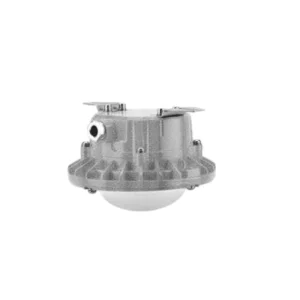
Refineries, chemical processing plants, and grain silos contain flammable gases or dust mixtures. Our explosion-proof lighting lines (such as the Fw6365 Explosion-Proof LED series) are engineered with flame-path joints, tempered impact-resistant glass covers, and highly efficient thermal management pathways to keep surface temperatures below the ignition threshold of volatile atmospheric mixtures, ensuring compliance with global ATEX/IECEx standards.
A professional manufacturer and supplier specializing in LED lighting and solar solutions, serving global markets for over a decade.
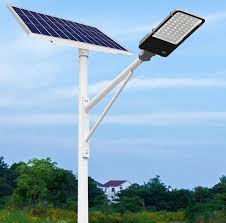
Yangzhou Boray Light Co., Ltd. is located in Yangzhou, Jiangsu Province—one of China’s leading lighting manufacturing hubs. Founded over a decade ago, Boray Light has grown into a professional manufacturer and supplier specializing in LED lighting and solar solutions, serving clients worldwide with innovative, energy-efficient products.
Boray Light integrates R&D, production, sales, and service. With a self-owned modern factory, complete production lines, and advanced testing equipment, the company is dedicated to delivering high-quality and reliable lighting solutions. Our products are widely applied in municipal projects, road and landscape lighting, industrial facilities, and residential spaces. Over the years, we have exported to Southeast Asia, the Middle East, Africa, Europe, and South America, earning a strong reputation for quality and service.
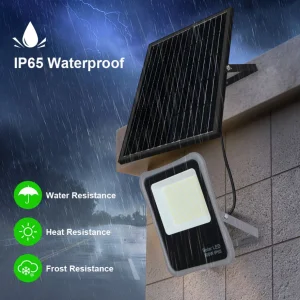
Boray Light designs and manufactures a comprehensive range of LED and solar lighting products. Our outdoor solutions include LED street lights, solar street lights (both all-in-one and split-type), garden lights, landscape illumination, floodlights, and solar security systems. For indoor applications, we produce LED bulbs, tubes, panels, downlights, and flexible LED strips, providing energy-efficient lighting for homes, offices, and commercial spaces.
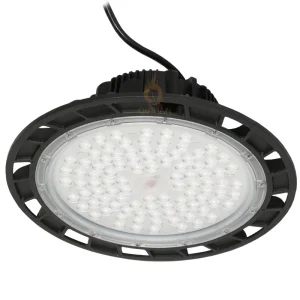
In industrial and specialized environments, we supply high bay lights, task lighting, and other professional-grade solutions. In addition, Boray Light offers complete solar power systems, including panels, batteries, energy storage units, and on-grid or off-grid systems, complemented by essential accessories such as lighting poles and installation brackets.
Every product is developed with strict attention to detail, from material selection and optical consistency to packaging and delivery, ensuring reliable performance and long-term durability.
Our R&D team, composed of experienced engineers and industry professionals, keeps pace with the latest developments in LED and solar technology. We provide professional lighting design support using advanced tools such as TracePro, Pro/E, and DIALux. Boray Light maintains close collaboration with universities and research institutions to continuously drive innovation and improve product performance.
Boray Light offers a unique combination of high-quality products, competitive pricing, and reliable service. Our integrated supply chain—including LED chips, drivers, housings, batteries, and solar panels—ensures product stability and timely delivery. Key management personnel, such as our plant manager, R&D manager, and international sales manager, have each worked in the company for over ten years, providing professional expertise and continuity.
We also maintain stock for popular items such as integrated solar street lights, 80W solar panels, and 6-meter lighting poles, enabling fast and efficient delivery for urgent projects.
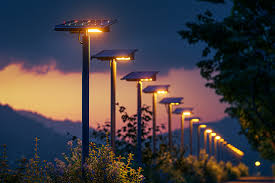
At Yangzhou Boray Light Co., Ltd., we are committed to providing sustainable, energy-saving, and high-performance lighting solutions. Guided by the principles of "Quality First, Customer Foremost, Innovation Driven," we aim to create long-term value for our global partners while contributing to a greener future.
How our local component integration guarantees stable lead times and consistent thermal and electrical performance.
The global electronic component supply chain has faced historic bottlenecks over the past few years. However, Yangzhou Boray Light's strategic location in Jiangsu Province allows us to maintain direct access to the world’s most dense cluster of optoelectronic component suppliers. By vertically integrating our manufacturing—controlling assembly, metal extrusion, optical lens design, and driver programming under a single manufacturing workflow—we significantly mitigate risk. Our long-term vendor agreements ensure priority supply of critical components, including high-efficiency Bridgelux/Osram LED chips and programmable wireless drivers.
Every batch of raw materials undergoes incoming quality control (IQC) before entering automated SMD high-speed mounting lines. Finished assemblies undergo automated aging tests under elevated ambient temperatures for 72 hours, alongside specialized IP testing chambers verifying dust tightness and liquid ingress protection. This rigorous process guarantees a low field failure rate (less than 0.2% annually) and ensures consistent delivery timelines for major construction developments.
Our electrical fixtures are engineered to meet strict international standards, facilitating frictionless custom clearance and site approval.
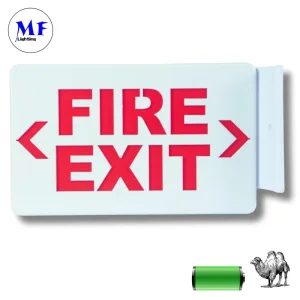
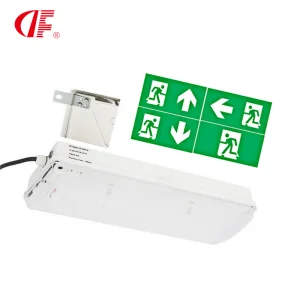
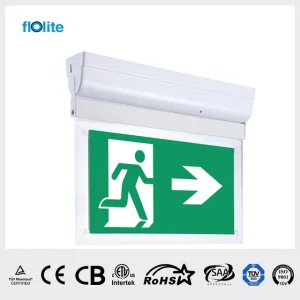
Our backup systems and emergency exit signage lines carry complete SAA certification, meeting AS/NZS 2293 standards for emergency lighting in commercial buildings.
All smart lighting configurations are fully compliant with Low Voltage (LVD), Electromagnetic Compatibility (EMC), and RoHS directives, simplifying project sign-offs across the EU and UK.
Our high-efficacy luminaires are designed to meet UL8750 safety standards, ensuring smooth integration into municipal power systems across North and South America.
How global procurement managers can leverage customized optics and wireless protocols to achieve faster return on investment (ROI).
When assessing new industrial lighting systems, procurement teams should evaluate the Total Cost of Ownership (TCO) rather than just the initial purchase price. The TCO includes initial capital expenditure (CAPEX), energy consumption costs, routine maintenance/bulb replacement labor (OPEX), and decommissioning costs. By choosing wireless controlled LED systems, maintenance teams can dynamically monitor driver health and run schedules. This enables predictive maintenance protocols—replacing critical components before an unexpected failure halts assembly lines.
Furthermore, our dedicated OEM/ODM workflow permits bespoke design adjustments. Our engineering team utilizes advanced software, including TracePro for optical trace analyses, Pro/E for tight-tolerance mechanical housing designs, and DIALux for site lighting simulations. This allows us to provide clients with precise layout maps, ensuring compliance with local lux level requirements while avoiding over-specification and reducing fixture count.
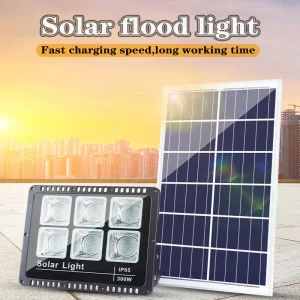
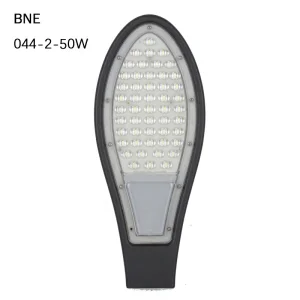
High-efficiency outdoor luminaires, smart city road lights, and customized architectural wall washers.
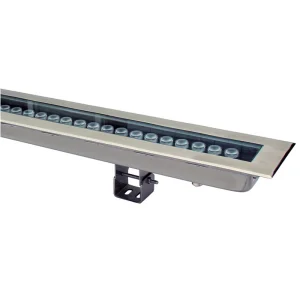
Critical answers to questions concerning interference, maintenance, cost reduction, and customization.
Our wireless control systems operate on frequency-hopping spread spectrum (FHSS) technology within the Bluetooth Mesh or Zigbee 3.0 protocols. By continuously shifting channels, the network automatically circumvents localized interference caused by large heavy machinery, electric motors, and high-frequency communication transmitters.
Yes. Our smart city solutions, such as the 150W Intelligent Street Light systems, are engineered with standardized NEMA/ZHAGA interfaces. They support standard APIs, allowing seamless integration with central management systems (CMS) via LoRaWAN, cellular NB-IoT, or 4G LTE grids.
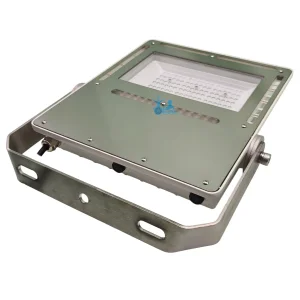
Our marine floodlights feature dual-layer powder coating over an ADC12 die-cast aluminum core. The base metal undergoes a chemical conversion pre-treatment, followed by a primer coat and an anti-corrosion top coat. Mounts are built with 316-grade stainless steel to ensure durability against aggressive sea spray.
For standard designs, we maintain warehouse stock of popular configurations (including integrated solar fixtures and poles), enabling fast shipment. For custom design work utilizing TracePro optical layouts and custom housings, prototyping takes approximately 10 to 15 days, with bulk production delivered in 3 to 4 weeks depending on the order scale.
Yes, all emergency exit signs and backup lighting systems carry required safety approvals. These include SAA certifications for Australia/New Zealand, and CE/CB/UKCA certificates for European and British markets. Standard models provide a minimum of 3 hours of illumination during primary mains power failure.
 Boray Light